
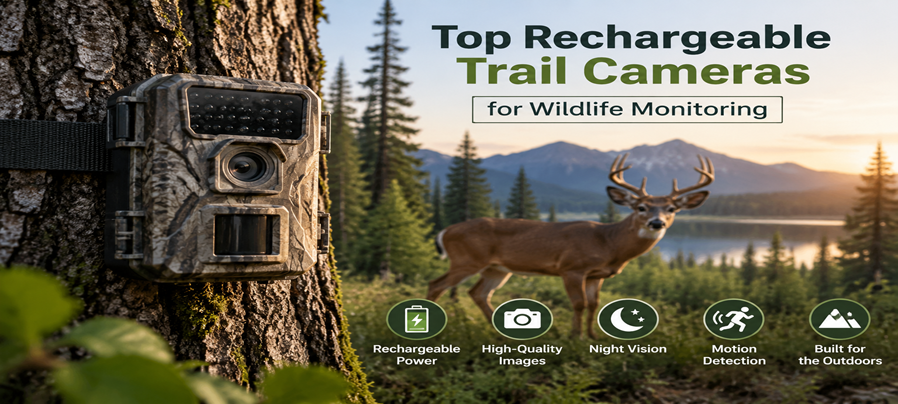
If you’ve ever placed a wildlife camera in a quiet corner of your property, you know the frustration of finding out the battery died just when something interesting passed by. A deer walks through at midnight, a fox stops by the boundary fence, or an unfamiliar person enters a remote area—and the camera has nothing to show for it.
That is one reason rechargeable Trail Cameras have become increasingly useful for wildlife monitoring and outdoor Security. Instead of constantly replacing disposable batteries, you can recharge the camera and, with some models, add solar charging to keep it running for much longer.
For people monitoring farms, forests, large gardens, remote properties, conservation areas, or outdoor assets, the right camera can do more than record wildlife. Cellular connectivity, motion detection, night vision and GPS Tracking can turn a basic trail camera into a practical remote monitoring tool.
Below, we’ll look at what makes a rechargeable trail camera worth considering and the features that matter most before you buy one.
What Is a Rechargeable Trail Camera?
A rechargeable trail camera is a motion-activated outdoor camera designed to operate for extended periods without being connected to mains electricity.
Most models use a rechargeable lithium battery. Some also include a solar panel that continually tops up the battery when there is enough sunlight.
Unlike conventional CCTV systems, Trail Cameras are usually designed to remain unattended in outdoor environments. They wake up when their motion sensor detects activity, capture photographs or video and then return to a low-power state.
That makes them particularly useful where running electrical cables is impractical.
For example, imagine monitoring a 20-acre farm. Installing conventional CCTV around every boundary could require extensive cabling, network infrastructure and power. A few strategically positioned trail cameras may provide a much simpler way to keep an eye on animal movement and activity.
Why Rechargeable Trail Cameras Make Sense for Wildlife Monitoring
The biggest advantage is straightforward: less battery maintenance.
Traditional cameras using disposable AA batteries can work well, but frequent visits to replace batteries become inconvenient when cameras are positioned deep inside woodland or on large rural properties.
A rechargeable model can be removed periodically, charged and returned to service. Solar-assisted models can reduce those visits even further.
Some current cellular models combine large rechargeable batteries with solar panels. For example, GardePro's X66 Pro uses a 7,800mAh rechargeable battery and can be paired with an optional solar panel.
That type of setup is especially attractive when the camera needs to remain in place for weeks or months.
What to Look for in the Best Rechargeable Trail Cameras
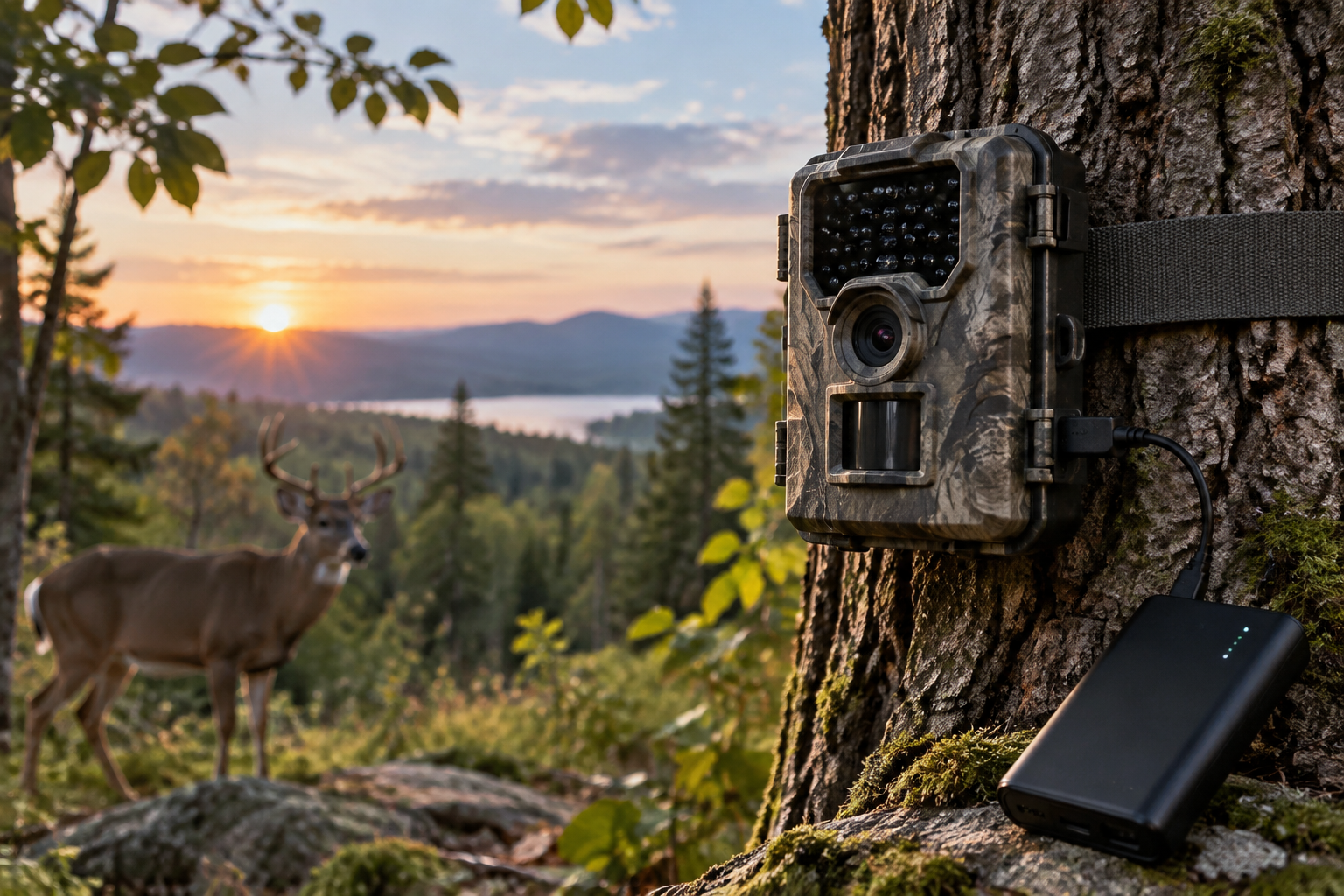
Not every camera marketed as a wildlife camera is equally suitable for long-term monitoring. Before choosing one, look beyond megapixels.
1. Battery Capacity
Battery capacity is one of the first specifications worth checking.
A larger battery generally gives the camera more operating time between charges, although actual performance depends heavily on how often the camera records, how frequently it transmits footage and the local temperature.
Cellular cameras typically consume more power because they have to communicate with a mobile network.
A camera with a 7,800mAh or 8,000mAh battery may therefore be a better choice for a remote installation than a smaller rechargeable unit.
2. Solar Charging
If you want to minimise maintenance, consider a camera that supports solar charging.
A solar panel does not necessarily mean the camera will run forever. Shade, cloudy weather, panel positioning and heavy recording can all affect performance.
The best approach is to treat solar power as a way of extending battery life rather than assuming the camera will never need attention.
For example, Ceyomur's CY75 and CY85 models combine rechargeable 5,200mAh batteries with 3W solar panels for extended outdoor use.
Mounting matters too. A camera may have an excellent solar panel, but if it is installed underneath dense tree cover, the panel may receive very little useful sunlight.
3. Cellular Connectivity
Cellular Trail Cameras are particularly useful when there is no Wi-Fi at the monitoring location.
Instead of physically visiting the camera to remove an SD card, a cellular model can send images or video to your phone through a mobile network.
Some cameras also provide live viewing and app-based alerts.
The trade-off is that cellular cameras normally require a data plan, and network coverage becomes an important consideration.
Before installation, check whether the chosen camera supports a cellular network that works reliably in that location.
4. No-Glow Night Vision
Wildlife does not always cooperate with daylight hours.
Animals are often most active around dusk, during the night or just before sunrise. That makes night vision essential for serious monitoring.
No-glow infrared, commonly associated with 940nm illumination, is useful when you want the camera to remain discreet. Some current models use invisible infrared LEDs specifically to avoid startling wildlife.
This can also be useful for Security applications where you do not want an obvious flash drawing attention to the camera.
5. Motion Detection
A good trail camera should not record continuously unless you specifically need that capability.
Instead, its PIR motion sensor detects movement and wakes the camera.
Look for adjustable sensitivity and a sensible detection range. A highly sensitive camera placed beside moving branches may produce hundreds of unwanted recordings.
A simple example: if you install a camera facing a busy road, you may end up filling the memory card with passing vehicles rather than wildlife. Positioning the camera away from unnecessary movement can make a huge difference.
6. GPS Tracking
GPS Tracking can be particularly useful when you operate several cameras across a large property.
If a camera is moved, stolen or simply forgotten in a remote location, location information can make it easier to identify where the unit is supposed to be.
The GardePro X66 Pro, for example, includes GPS location syncing and anti-theft tracking through its app.
For a single backyard camera, this may not matter much. For a wildlife project involving multiple remote cameras, it can become a valuable management feature.
Best Rechargeable Trail Camera Types for Different Needs
Rather than choosing one camera simply because it has the highest resolution, think about how you will actually use it.
Best for Remote Wildlife Monitoring
A 4G cellular solar trail camera is a strong choice when the camera will be installed somewhere without Wi-Fi.
Models such as the Campark TC17 combine 4G connectivity, an 8,000mAh rechargeable battery and a 4W solar panel, while providing app-based remote viewing.
This type of camera makes sense for forests, farms, remote land and other locations where visiting the camera regularly is inconvenient.
Best for Off-Grid Monitoring
For genuinely remote locations, look for three things together:
- Large rechargeable battery
- Solar charging
- Reliable cellular connectivity
For example, Xega's 4G models combine rechargeable batteries, solar charging, motion detection and remote smartphone access.
The important point is not to focus on one specification in isolation. A powerful camera is of little use if the battery dies or the cellular signal is unreliable.
Best for Simple Wildlife Observation
Not everyone needs an app, GPS or cellular subscription.
If your camera is located close to home and you are happy to retrieve an SD card, a conventional non-cellular trail camera may actually be the better option.
You have fewer connectivity concerns, no ongoing cellular data requirement and generally fewer things to configure.
Trail Cameras vs CCTV Solar Cameras
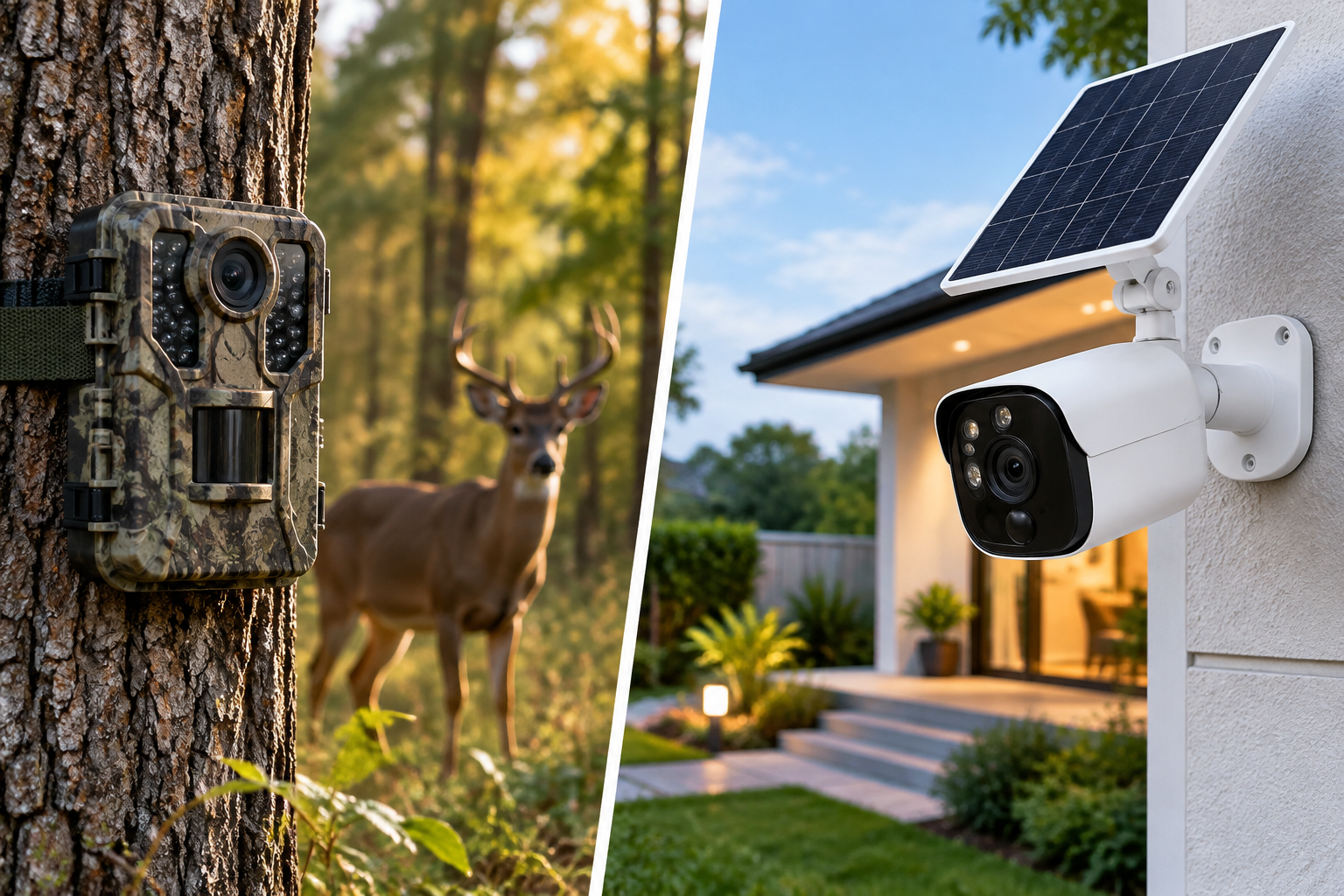
Trail Cameras and a CCTV Solar Camera can look similar on paper, but they are designed for somewhat different jobs.
A solar CCTV system is generally better when you want continuous or more frequent security monitoring around a building, entrance, driveway or fixed area.
Trail Cameras are usually better suited to detecting occasional movement in locations such as woodland, fields and wildlife corridors.
For example, a farm might use solar CCTV cameras around the main house and storage buildings while using rechargeable Trail Cameras along the outer boundary to monitor animal movement.
The two systems can complement each other rather than compete with one another.
Practical Tips for Installing a Trail Camera
Where you put the camera can matter just as much as which model you buy.
Choose the right height
Avoid positioning the camera too high unless there is a specific reason to do so. The ideal height depends on the animals you are monitoring.
For smaller wildlife, a lower mounting position may provide a much better view.
Watch the background
Avoid pointing the camera directly toward the rising or setting sun. Strong sunlight can create poor images and may also cause unnecessary motion triggers.
Clear the immediate area
Leaves and branches moving in the wind can trigger PIR sensors repeatedly.
Trim only what is necessary, though. The goal is to create a clear view without significantly changing the natural environment.
Test before leaving
Always perform a few daytime and nighttime tests before leaving the camera unattended.
Check the detection zone, image framing, night vision and cellular connection.
A five-minute test in your garden can save you a frustrating trip back into the woods later.
Common Mistakes People Make
One common mistake is buying a camera based almost entirely on its advertised megapixel number.
More megapixels do not automatically mean better wildlife footage. Lens quality, sensor performance, infrared illumination, trigger speed and image processing all affect the final result.
Another mistake is ignoring cellular subscription costs.
A camera may look inexpensive initially, but if it requires a monthly data plan, the total cost of ownership can be considerably higher.
People also sometimes underestimate the importance of network coverage. A camera with excellent specifications cannot send an alert if it cannot establish a reliable cellular connection.
Finally, do not assume that solar charging eliminates maintenance. Dust, shade, poor positioning and extended periods of bad weather can reduce charging performance.
Where Security Fits Into Wildlife Monitoring
Although Trail Cameras are traditionally associated with wildlife observation and hunting, they can also support outdoor Security.
A farm owner may use them to understand where animals are entering a property. A landowner might monitor a remote gate. A conservation team could track animal movement without visiting the site every day.
In some situations, a camera can also provide an early indication of unexpected human activity.
That does not make a trail camera a replacement for a complete Security system. For entrances, buildings and areas requiring continuous observation, dedicated CCTV may still be the better choice.
And for personal safety, a camera is not a substitute for a Personal Alarm or other appropriate safety equipment.
The right solution depends on what you are trying to protect and what type of activity you need to detect.
Frequently Asked Questions
Are rechargeable Trail Cameras better than battery-powered cameras?
They can be, particularly when the camera is installed in a remote location. Rechargeable batteries reduce the need to repeatedly purchase and replace disposable batteries. However, a conventional battery-powered camera may still make sense where the camera is easy to access.
How long does a rechargeable trail camera last?
There is no single answer. Battery life depends on battery capacity, temperature, number of recordings, cellular transmission, video length and solar charging conditions. A camera that records hundreds of events every day will naturally use much more power than one that captures a few clips each week.
Do rechargeable Trail Cameras need Wi-Fi?
Not necessarily. Many cellular models use 4G networks instead of Wi-Fi. For example, several current cellular cameras are specifically designed to operate in locations without Wi-Fi.
Is GPS Tracking useful on a wildlife camera?
It can be, especially when you have several cameras spread across a large area. GPS can help you keep track of camera locations and may provide additional protection against misplaced or stolen equipment.
Are solar Trail Cameras reliable?
They can be very reliable when installed correctly. However, solar performance depends on sunlight, panel placement, weather and camera usage. A rechargeable battery should still be viewed as the main power reserve.
Are Trail Cameras suitable for Security?
Yes, for certain outdoor monitoring situations. They can be useful for remote land, farms, wildlife areas and locations without mains power. For continuous monitoring of entrances, buildings or high-risk areas, a dedicated CCTV system may be more appropriate.
What should I look for in a wildlife camera at night?
Look for good infrared performance, preferably no-glow illumination if discreet monitoring is important. Also consider motion detection accuracy, trigger speed and the camera's ability to produce usable images in low light.
Final Thoughts
The best rechargeable Trail Camera is not necessarily the one with the biggest megapixel number or the longest feature list.
Start with your location and your actual monitoring requirements. If the camera will be deep in a forest, rechargeable power, solar charging and 4G connectivity may be your priorities. If it is only a few minutes from your home, a simple SD-card model may be perfectly adequate.
Think about battery capacity, night vision, motion detection, weather resistance, connectivity and GPS Tracking before making a decision. And don't overlook installation—the best camera can still produce disappointing results if it is pointing at the wrong place.
If you are considering Trail Cameras for wildlife monitoring, farm protection or remote outdoor Security, SpyPro Security Solutions could be a useful name to explore when comparing your options. The goal should always be a monitoring setup that fits the property, the environment and the level of protection you actually need.