
Choosing the right security system isn't always as simple as picking the camera with the highest resolution or the most features.
One of the biggest decisions property owners face today is whether to install solar CCTV cameras or use traditional wired security cameras connected to mains power.
Solar-powered cameras can be particularly attractive for rural properties, construction sites, farms, gates, sheds and locations where running electrical cables would be expensive or impractical. Traditional CCTV, meanwhile, remains a popular choice for homes and businesses that need continuous, dependable surveillance.
So, which option is better?
The answer depends on your property, available power, network connectivity, security requirements, and budget.
In this guide, we'll compare solar CCTV cameras and traditional security cameras, explain their advantages and disadvantages, and provide practical tips to help you choose the right system.
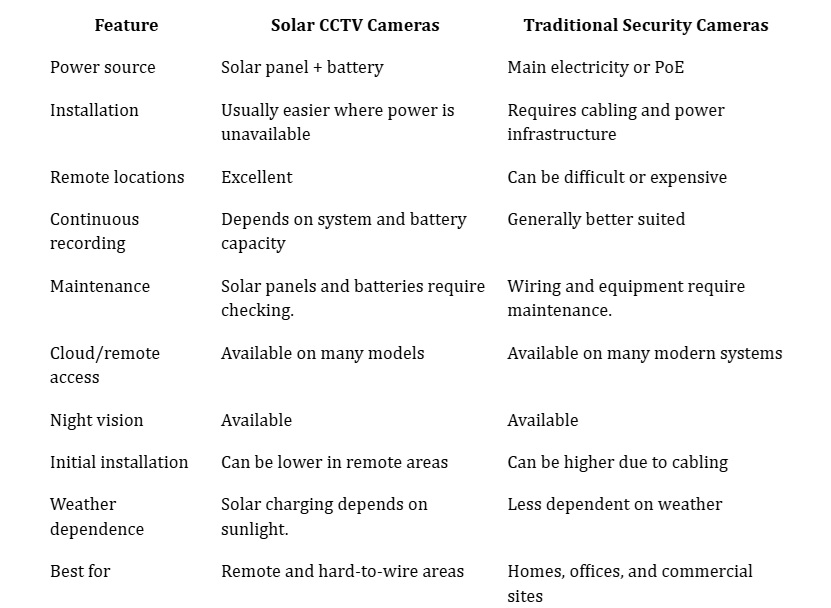
Solar CCTV Cameras vs Traditional Security Cameras at a Glance
For a quick comparison:
What Are Solar CCTV Cameras?
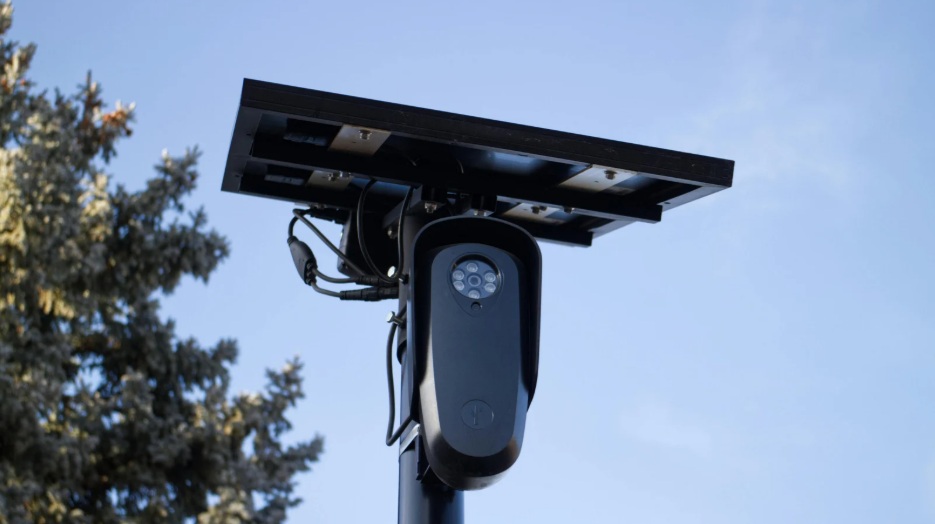
Solar CCTV cameras use a solar panel to generate electricity, which is stored in a rechargeable battery.
Instead of relying entirely on mains electricity, the camera uses stored energy when sunlight isn't available, including overnight.
Depending on the model, a solar security camera may offer:
HD or 4K video
Infrared night vision
Motion detection
Two-way audio
Smartphone notifications
4G connectivity
Wi-Fi
Cloud recording
Local memory card storage
Rechargeable batteries
Remote live viewing
The biggest advantage is straightforward: you can install surveillance in places where conventional electrical cabling is difficult or unavailable.
What Are Traditional Security Cameras?
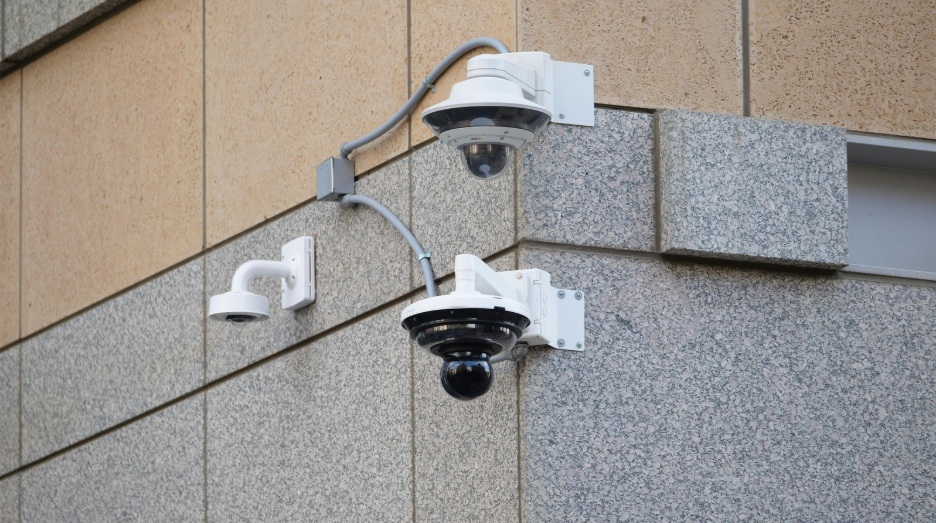
Traditional security cameras are generally connected to a permanent power source.
Modern systems often use Power over Ethernet (PoE), allowing both power and data to travel through a single network cable. Other systems use separate power and video connections.
A traditional CCTV installation can include:
Multiple cameras
Network Video Recorder (NVR)
Digital Video Recorder (DVR)
PoE switches
Monitors
Network connection
Hard-drive storage
Motion detection
Remote smartphone access
For properties requiring several cameras and continuous recording, a professionally designed wired CCTV system can provide significant advantages.
Solar CCTV Cameras: Advantages and Disadvantages
Advantages of Solar CCTV Cameras
1. Easier Installation in Remote Locations
One of the strongest reasons to choose solar is the ability to install a camera where running power cables isn't practical.
For example, imagine a rural property with a driveway gate located several hundred metres from the main building.
Running underground electrical cabling may involve excavation, permits, labour and additional equipment.
A solar camera could potentially provide surveillance without requiring a permanent electrical connection.
2. Lower Infrastructure Requirements
Solar cameras can reduce the need for extensive electrical infrastructure.
This can be useful for:
Farms
Rural properties
Construction sites
Storage yards
Remote gates
Temporary sites
Workshops
Large outdoor areas
3. Flexible Placement
Because the camera doesn't necessarily need a mains connection, you have greater flexibility when choosing where to position it.
However, flexibility doesn't mean you can install the panel anywhere.
The solar panel needs sufficient exposure to sunlight to maintain the battery.
4. Smartphone Alerts
Many modern solar cameras can connect to a smartphone application.
Depending on the system, you may receive an alert when movement is detected and then view the camera remotely.
This can be extremely useful when monitoring a property you're not physically near.
Disadvantages of Solar CCTV Cameras
1. Solar Charging Depends on Conditions
This is the biggest limitation.
A solar panel cannot produce the same amount of energy every day.
Performance can be affected by:
Cloudy weather
Shade
Dirt
Incorrect panel positioning
Seasonal changes
Short winter days
A high-quality battery helps, but it doesn't eliminate the underlying limitation.
2. Battery Degradation
Rechargeable batteries don't last forever.
Over time, battery capacity can decline. Eventually, the battery may need replacement depending on the camera design.
3. Continuous Recording Can Be Challenging
Solar cameras are generally most efficient when they use motion detection and enter a low-power standby state.
If you need continuous 24/7 recording, a traditional powered CCTV system may be more appropriate.
Traditional Security Cameras: Advantages and Disadvantages
Advantages of Traditional CCTV Cameras
1. Reliable Continuous Power
A mains-powered or PoE camera doesn't depend on sunlight to remain operational.
This is particularly important for properties requiring continuous surveillance.
2. Better for Multi-Camera Systems
Traditional CCTV systems are usually easier to scale when you need several cameras.
For example, a business might require coverage of:
Front entrance
Reception
Car park
Warehouse
Loading area
Rear entrance
Storage rooms
A central NVR can record footage from multiple cameras simultaneously.
3. Consistent Recording
When sufficient storage and power are available, wired CCTV can provide consistent recording without worrying about solar charging conditions.
4. Strong Network Performance
PoE systems can provide a stable wired connection between cameras and the recording system.
This can be preferable where wireless signals are unreliable.
Disadvantages of Traditional CCTV
1. Installation Can Be More Involved
Installing wired cameras may require:
Cable runs
Drilling
Conduit
Electrical work
Network infrastructure
Professional installation
The difficulty increases when cameras are positioned far from the main building.
2. Higher Installation Costs in Some Locations
The camera itself may not be the most expensive component.
Labour and infrastructure can significantly affect the total installation cost.
3. Less Flexible Placement
A wired camera generally needs suitable cabling and power infrastructure.
Which Is More Reliable: Solar or Traditional CCTV?
For continuous surveillance, traditional wired CCTV generally has the advantage because it doesn't rely on sunlight for power.
For remote locations without convenient access to electricity, solar CCTV can be the more practical solution.
The key isn't simply which technology is "better."
It's about matching the technology to the environment.
Solar CCTV vs Traditional Cameras: Which Is Cheaper?
The purchase price alone doesn't tell the whole story.
Consider the total cost of ownership.
For traditional CCTV, calculate:
Camera costs
NVR/DVR
Hard-drive storage
Ethernet or other cabling
Network equipment
Installation labour
Maintenance
For solar CCTV, consider:
Camera
Solar panel
Battery
SIM/data plan if using 4G
Cloud storage, if applicable
Mounting equipment
Battery replacement
Maintenance
A solar camera may have a higher equipment price but lower installation costs in a remote location.
Conversely, wired CCTV may be more economical when power and network infrastructure are already available.
How to Choose the Right CCTV System
Use this simple process before purchasing.
Step 1: Identify What You Need to Monitor
Make a list of the areas requiring coverage.
For example:
Front door
Driveway
Side gate
Backyard
Garage
Warehouse
Farm entrance
Don't buy cameras before deciding where coverage is actually required.
Step 2: Check Power Availability
Ask:
Is mains electricity already available at the proposed camera location?
If yes, wired CCTV becomes more attractive.
If no, solar becomes a stronger option.
Step 3: Check Internet or Mobile Connectivity
A camera may require Wi-Fi, Ethernet or 4G connectivity.
For remote locations, a 4G solar camera may be preferable where mobile coverage is reliable.
Step 4: Decide Whether You Need 24/7 Recording
This is one of the most important questions.
If you only need recordings when movement occurs, solar can work very well.
If you need continuous recording, consider a traditional wired CCTV system.
Step 5: Consider Night-Time Requirements
Look for features such as:
Infrared night vision
Colour night vision
Low-light sensors
Integrated lighting
Wide dynamic range
Don't judge night performance solely by the advertised resolution.
What About Inspection Cameras?
Inspection cameras are different from conventional CCTV security cameras.
An inspection camera is generally designed to see into difficult-to-access spaces, such as pipes, cavities, machinery or other confined areas.
They can be useful for inspection and troubleshooting, but they're not normally a substitute for a permanent security surveillance system.
If your objective is property protection, focus on cameras designed for the environment and surveillance task.
If your objective is examining a difficult-to-access physical area, an inspection camera may be more appropriate.
How to Get the Most From a Solar CCTV Camera
Installing a solar camera correctly can make a major difference.
Position the Solar Panel Correctly
Place the panel where it receives good sunlight for much of the day.
Avoid unnecessary shade from:
Trees
Buildings
Roof structures
Fences
Other equipment
Keep the Panel Clean
Dust, leaves and bird droppings can reduce charging efficiency.
Inspect and clean the panel periodically using an appropriate method recommended by the manufacturer.
Don't Point the Camera Directly at the Sun
Direct sunlight can cause glare and poor exposure.
Position the camera so important areas aren't overwhelmed by bright sunlight.
Test the Camera at Night
Daytime footage can look excellent while night footage performs poorly.
Always test the actual installation after dark.
Common CCTV Mistakes to Avoid
Choosing Resolution Instead of Coverage
A 4K camera doesn't help if the critical entrance is outside its field of view.
Coverage should come first.
Ignoring False Motion Alerts
Trees, shadows, insects and moving vegetation can trigger unnecessary notifications.
Adjust motion sensitivity and detection zones where possible.
Installing Cameras Too High
A camera mounted extremely high may provide a broad overview but produce poor facial detail.
Camera height should balance tamper resistance with useful identification.
Forgetting Storage Requirements
High-resolution recordings consume storage quickly.
Calculate how much footage you need before selecting an NVR, memory card or cloud plan.
Ignoring Privacy
Security cameras should not be positioned carelessly toward neighbouring properties or areas where people reasonably expect privacy.
Audio recording can also raise additional legal considerations.
If you're unsure about the appropriate setup, seek professional advice before installation.
Solar CCTV or Traditional CCTV: Which Should You Choose?
Choose solar CCTV cameras if:
Power isn't available
You need remote monitoring
The location is difficult to cable
You need a flexible installation
Motion-triggered recording is sufficient
The location receives adequate sunlight
Choose traditional CCTV cameras if:
Mains power is available
You require continuous recording
You need multiple cameras
You want centralised NVR storage
Network reliability is important
You're securing a home, office or commercial property
In some situations, a hybrid security system can be the best solution.
For example, a business could use wired CCTV around the main building while using solar-powered 4G cameras to monitor a remote car park, gate or storage area.
Why Professional Camera Planning Matters
Buying good equipment is only part of creating an effective surveillance system.
Camera placement, field of view, lighting, network connectivity, storage and power requirements all influence the final result.
A professional security assessment can identify blind spots and determine whether solar, wired or hybrid surveillance is appropriate.
If you're comparing cameras, CCTV systems, solar surveillance or inspection cameras, SpyPro Security Solutions can be considered as a starting point for professional security advice and system planning.
Frequently Asked Questions
Are solar CCTV cameras worth buying?
Yes, particularly when you need surveillance in an area where installing mains power would be difficult or expensive. They're especially useful for rural properties, farms, gates and remote outdoor areas.
Do solar security cameras work at night?
Yes. The solar panel charges the camera's battery during suitable daylight conditions, while the stored energy powers the camera at night.
What happens to a solar CCTV camera during several cloudy days?
The camera relies on its stored battery power. Extended periods of low sunlight can eventually reduce battery capacity and cause the camera to stop operating until sufficient energy is restored.
Can solar CCTV cameras record continuously?
Some can, but continuous recording uses considerably more power than motion-triggered recording. Check the manufacturer's specifications before assuming a solar camera is suitable for 24/7 recording.
Are wired CCTV cameras better than wireless cameras?
Not necessarily. Wired cameras can provide reliable power and network connectivity, while wireless and solar cameras can offer greater installation flexibility. The best option depends on the property.
Can I use solar CCTV without Wi-Fi?
Yes. Some solar security cameras use 4G/LTE connectivity rather than Wi-Fi. A suitable mobile signal and compatible data service are required.
How long do solar CCTV batteries last?
Battery runtime depends on capacity, camera settings, motion activity, video quality, night vision use, temperature and connectivity. Battery lifespan also depends on the battery technology and charging conditions.
Should I install CCTV myself or hire a professional?
DIY installation can work for simple systems. Professional installation is worth considering for larger properties, multiple cameras, complex networks, difficult mounting locations or security systems where coverage and reliability are particularly important.